FAIR USE NOTICE

Bear Market Economics (Issues and News)

FAIR USE NOTICE

This site may contain copyrighted material the use of which has not always been specifically authorized by the copyright owner. We are making such material available in an effort to advance understanding of environmental, political, human rights, economic, democracy, scientific, and social justice issues, etc. we believe this constitutes a ‘fair use’ of any such copyrighted material as provided for in section 107 of the US Copyright Law.

In accordance with Title 17 U.S.C. Section 107, the material on this site is distributed without profit to those who have expressed a prior interest in receiving the included information for research and educational purposes. For more information go to: http://www.law.cornell.edu/uscode/17/107.shtml

If you wish to use copyrighted material from this site for purposes of your own that go beyond ‘fair use’, you must obtain permission from the copyright owner.

FAIR USE NOTICE FAIR USE NOTICE: This page may contain copyrighted material the use of which has not been specifically authorized by the copyright owner. This website distributes this material without profit to those who have expressed a prior interest in receiving the included information for scientific, research and educational purposes. We believe this constitutes a fair use of any such copyrighted material as provided for in 17 U.S.C § 107.

Read more at: http://www.etupdates.com/fair-use-notice/#.UpzWQRL3l5M | ET. Updates
FAIR USE NOTICE FAIR USE NOTICE: This page may contain copyrighted material the use of which has not been specifically authorized by the copyright owner. This website distributes this material without profit to those who have expressed a prior interest in receiving the included information for scientific, research and educational purposes. We believe this constitutes a fair use of any such copyrighted material as provided for in 17 U.S.C § 107.

Read more at: http://www.etupdates.com/fair-use-notice/#.UpzWQRL3l5M | ET. Updates

All Blogs licensed under Creative Commons Attribution 3.0

Saturday, March 21, 2015

Tea Party’s absurd advantage: Why America’s budget talk is so messed up


SALON


Tea Party’s absurd advantage: Why America’s budget talk is so messed up

Paul Ryan & co. repeatedly unveil plans from the far right fringe -- and get taken seriously each time. Here's why


Tea Party's absurd advantage: Why America's budget talk is so messed upRand Paul, Ted Cruz, Paul Ryan (Credit: Reuters/Yuri Gripas/AP/J. Scott Applewhite)
It must be springtime since all of the Village is once again excitedly poring over the Republican budget plan. As usual they are searching for reasons to praise its responsible agenda of slashing benefits for poor , old and sick people in order that we all be forced to “take our medicine” and recognize that “we are all going to have to sacrifice.”  (Of course the millionaire celebrities who are saying won’t feel any pain, but you can be sure they have your best interests at heart.)
In years past, the star of the show was Very Serious Person, Paul Ryan, the Republican budget savant who everyone agreed was so spectacularly serious that even though his budget numbers never added up, he was still worthy of deep respect and rapt attention just because he was so darned … serious. This piece by William Saletan from 2012 perfectly illustrates the phenomenon:
Ryan is a real fiscal conservative. He isn’t just another Tea-Party ideologue spouting dogma about less government and the magic of free enterprise. He has actually crunched the numbers and laid out long-term budget proposals.
Paul Krugman was appropriately gobsmacked:
Look, Ryan hasn’t “crunched the numbers”; he has just scribbled some stuff down, without checking at all to see if it makes sense. He asserts that he can cut taxes without net loss of revenue by closing unspecified loopholes; he asserts that he can cut discretionary spending to levels not seen since Calvin Coolidge, without saying how; he asserts that he can convert Medicare to a voucher system, with much lower spending than now projected, without even a hint of how this is supposed to work. This is just a fantasy, not a serious policy proposal. So why does Saletan believe otherwise? Has he crunched the numbers himself? Of course not. What he’s doing – and what the whole Beltway media crowd has done – is to slot Ryan into a role someone is supposed to be playing in their political play, that of the thoughtful, serious conservative wonk. In reality, Ryan is nothing like that; he’s a hard-core conservative, with a voting record as far right as Michelle Bachman’s, who has shown no competence at all on the numbers thing.
What Ryan is good at is exploiting the willful gullibility of the Beltway media, using a soft-focus style to play into their desire to have a conservative wonk they can say nice things about. And apparently the trick still works.
Indeed it did. But it turns out that it wasn’t only particular to the Very Serious Ryan, with whom they did have a Very Serious love affair. For years, no matter how tragically misguided the proposed tax cuts for the rich and benefits cuts for the poor and whatever hare-brained “reforms” he pretended to propose the commentariat acted as if the yearly Republican budget had been delivered directly from Mt Sinai. This year proves that they will greet every braindead, extremist GOP budget with similar excitement regardless of Ryan’s involvement.  The 2015 Budget Committee proposal under the new chairman Tom Price, for instance, has garnered tremendous coverage even as it’s acknowledged by everyone that it has as much chance of passing as a ban on flying American flags at political events.
After much hemming and hawing and jockeying between the defense hawks and the fiscal hawks with the Tea Party vultures pacing around with a ravenous look in their eyes, the House GOP budget committee finally managed to pass a document. Passing the budget in the full House and then coming together with the Senate in reconciliation is a long shot to say the least, despite the fact that they are promising to lard the reconciliation process with as many offensive proposals as they can muster. It would be entertaining if it weren’t such a stale and boring story line by now. But the beltway wags can’t stop themselves from writing breathless story after breathless story even as they acknowledge that the budget features draconian cuts to necessary services,  has little chance of passage and no chance of being signed by the president. The fact that the numbers never add up is barely mentioned.
Meanwhile, every year the House Progressive Caucus releases what they entitle The People’s Budget, with numbers that add up, sensible deficit reduction along with protection for the most vulnerable paid for by higher taxes on the wealthiest among us. Katrina vanden Heuval described it this way in the Washington Post:
On the investment side, the CPC expands investments in areas vital to our future. It would rebuild America, modernizing our outmoded infrastructure. It would invest to lead the green industrial revolution that is already forging markets and creating jobs across the globe.
The CPC understands that we must do the basics in education. It would provide pre-K for every child, the most important single reform we can make in education. It calls for increasing investment in our public schools, helping to mitigate the destructive inequality between rich districts and poor. It would provide students with four years of debt-free college education, and pay for renegotiating existing student loans, relieving the burden now crushing an entire generation.
The CPC recognizes that more seniors are facing a retirement crisis. On budget, it would adopt an inflation measure for Social Security that reflects the rising costs seniors face in areas like health care. Off budget, the CPC calls for expanded Social Security benefits, paid for by lifting the income cap on Social Security payroll contributions. No longer would Donald Trump pay a lower rate in Social Security taxes than the police who guard his palaces.
The CPC would also expand the Earned Income Tax Credit and the Child Tax Credit, giving a break to low-wage workers and to parents struggling with the costs of childcare. And needless to say, the CPC would defend Medicare and Medicaid, not privatize it, and strengthen health-care reform, not eliminate it.
But with the exception of a few scattered liberal writers, that proposal might as well have been released underwater for all the attention it gets. If it is mentioned by the mainstream cognoscenti it’s usually accompanied by eye-rolling and barely suppressed giggles as if this proposal was found on the back cover of Angela Davis’s copy of Das Kapital. Meanwhile, the dead on arrival GOP slash and burn budget is discussed endlessly on every cable network.
And it’s not just the People’s Budget that gets short shrift. Paul Waldman wrote a post at the Plumline on Thursday in which he pointed out that there’s yet another liberal economic plan in the mix:
Today, the Economic Policy Institute — a liberal think tank that gets support from labor unions — released an 11-point “Agenda to Raise America’s Pay,” and it’s worth paying attention to because something like it will probably become Hillary Clinton’s economic plan. Conservatives would probably look at it and say this is the same old thing: Increase the minimum wage, lower barriers to collective bargaining, invest in infrastructure, reform immigration, raise taxes on the wealthy and so on. (You can see a similar set of recommendations in this report from the Center for American Progress.) But the fact that many of these ideas are familiar doesn’t diminish the degree to which they’re both popular and aimed directly at income inequality. And some of the proposals, such as increasing the availability of overtime pay and sick leave, or encouraging the Fed to prioritize lowering unemployment over protecting against future inflation, haven’t been as commonly discussed among regular people sitting around kitchen tables.
It’s doubtful that most Americans have discussed more than a few high profile proposals like the minimum wage at the dinner table. Why would they? The media never mentions them. Now, if Clinton wins the nomination and does adopt this agenda as her own, they will certainly get more play. But it starts at a disadvantage compared to the GOP budget plans because people have heard all these conservative proposals again and again being discussed respectfully in the media while the liberal agenda sounds like something jarring and odd.
The People’s Budget and the Agenda to Raise America’s Pay are mainstream programs that would be eminently achievable if the Republicans and the moneyed elites would allow taxes on the people who are reaping all the benefits in this economy to be raised to a level that makes sense. They do not need all the money, they really don’t. If they are taxed at the rates people of vast wealth have historically been taxed they will still have vast wealth. But this is considered crazy talk in the political world. The GOP’s insistence that 5+5=12, on the other hand, is not only perfectly respectable it is Very, Very Serious.
Heather Digby Parton
Heather Digby Parton, also known as "Digby," is a contributing writer to Salon. She was the winner of the 2014 Hillman Prize for Opinion and Analysis Journalism.

Tuesday, March 3, 2015

Why conservatives refuse to believe Obama is Christian


SALON


Why conservatives refuse to believe Obama is Christian

Scott Walker is the latest Republican to question the president's faith, and he's not just speaking to the fringe


Why conservatives refuse to believe Obama is ChristianScott Walker (Credit: AP/Andy Manis)
This article originally appeared on Religion Dispatches
 
Religion Dispatches Alex Theodoridis, a political scientist at the University of California, Merced, conducted a survey last fall of Americans’ understanding of President Obama’s religious beliefs. Remarkably, he found that in response to the question, “Which of these do you think most likely describes what Obama believes deep down? Muslim, Christian, atheist, spiritual, or I don’t know,” 54 percent of Republicans said Obama is Muslim. Only nine percent said he is Christian.

Writing at the Washington Post’s Monkey Cage blog, Theodoridis elaborated:
The percentage selecting “Muslim” is notably higher than in other polls conducted on this topic. This difference likely depends on how the question is phrased.
Previous survey questions about Obama’s religion tend to sound like a pop quiz — such as “do you happen to know the religious faith of Barack Obama?” But by asking “what Obama believes deep down?” I was intentionally granting respondents license to stray from the pesident’s self-reported Christian faith. This reveals a prevalent willingness to distrust this pesident or categorize him as “the other” in terms of religion.
Of course, respondents could also be “cheerleading” — using a survey question to express their general dislike of Obama rather than a genuine view about his religious faith.
But, if these results were largely driven by anti-Obama cheerleading, we should expect more respondents, especially Republicans, to choose the very unpopular category of “atheist.” Relatively few do so.
Previous ruminations on the Obama-is-a-secret-Muslim theme have suggested various sources for it: ignorance, Fox News, racism, too much World Net Daily in your diet.

Theodoridis’ post was inspired by Wisconsin Governor Scott Walker’s remarks that he didn’t know whether Obama is a Christian. But do other elected Republicans suggest that Obama is not only not a Christian, but a Muslim? I ran a search in the Congressional Record for recent floor speeches in which the word Islam or Islamic and the President appear. This is snapshot, of course, and the number of constituents who actually listen to these speeches is infinitesimal. But if elected Republicans aren’t afraid to question Obama’s religious commitments for the permanent record, think of what they might say to constituents in smaller settings, or the well that they are drawing from when they make remarks in Congressional sessions for which they receive no pushback, and in fact receive encouragement.

Republicans drew from recent conservative complaints that Obama refuses to say that Islamic State and other terrorist groups are “Islamic,” that he doesn’t take the threat of terrorism seriously, and he is insufficiently protective of American exceptionalism.

On February 24, 2015, Rep. Mark Walker (R-NC) said on the House floor that his constituents “shared with me their frustration at the ambiguous language from this administration in describing the evils of radical Islamist terrorism,” and that he himself has “grown weary at the timidity” of Obama, who “continues to be defensive, at best.” He went on:
At first glance, the silence appears to be passive or poor leadership. But I am inclined to believe that the President’s posture is not one of weakness but, rather, an intentional directive in both rhetoric and action. It appears that his promise to take our country in a fundamentally new direction is being played out in realtime. Instead of defending our liberty and our way of life, which is the most charitable in the world, our President seems to scoff at the belief that our country has been uniquely blessed by God.
I would be remiss today if I did not pause and remember our Egyptian Christian brothers in the recent barbaric attacks in Libya. ISIS murdered innocent husbands and fathers who clearly died for their faith and their beliefs.
Just this morning, we hear further reports out of Syria that Islamic State militants have abducted dozens of Christians, including women and children. Weeks prior, the President chastised the Christian community for getting on their judgmental high horses. Yet, in describing our martyred brothers from Egypt, the President refused to even utter the word, “Christian.”
The undermining of our beliefs has become an issue with this President.
Contrary to Walker’s statement, which echoes a claim circulating in conservative circles that Obama did not identify the Coptic victims of the Islamic State massacre as Christians, at last week’s summit on countering religious extremism, Obama noted that that Islamic State’s “slaughter of EgyptianChristians in Libya has shocked the world.” Notice, in Walker’s speech, the juxtaposition of the statement that Obama “seems to scoff at the belief that our country has been uniquely blessed by God” (i.e., he’s not a Christian) with his own remembrance of the murdered Egyptian Christians “who clearly died for their faith and their beliefs.”

Some of the floor statements come from ardent Christian supporters of Israel, who contrast Obama negatively with Israeli Prime Minister Benjamin Netanyahu.

In a February 5, 2015 floor speech, Rep. Trent Franks (R-AZ) called Netanyahu “one of the most prescient voices that we have in the entire world to address some of the subjects and some of the dangers that face the United States of America.” In contrast, Franks claimed, Obama “chooses to listen to these mysterious voices of those who did not vote in our Nation’s election,” yet “has sought to go after and silence” Netanyahu. (He did not specify whose “mysterious voices” were whispering in Obama’s ear.) Franks questioned whether Obama is “so naive or, worse, so arrogant as to believe that we can have any type of credible, diplomatic agreement” with Iran.

Rep. Ted Poe (R-TX), in February 2, 2015 floor remarks, asked, “this administration also refuses to say that we are at war with radical Islam. There is so much sensitivity in the White House over its statements that one is puzzled to wonder: Why are they sensitive about calling terrorists ‘terrorists?’”
Hmm. Gotta wonder, right?

The next day in a floor speech, Rep. Louie Gohmert (R-TX), after describing atrocities committed by terrorists, added, “I guess if you are part of this administration, you shouldn’t consider that to be all that radical because this administration, under their watch, with Commander in Chief Barack Obama, had orders given to remove crosses from the chapels on our military installations.” (Gohmert repeats this claim, despite it having been debunked in 2013; the military, according to FactCheck.org, “has a longstanding policy against permanent religious symbols being attached to military chapels.”) In the speech, two days before the National Prayer Breakfast, Gohmert noted Obama’s upcoming appearance, adding, “I am greatly appreciative of the President’s espoused faith.” (emphasis mine).

In a January 14, 2015 stemwinder, after laying out a litany of Obama’s alleged sins in failing to recognizing “that radical Islam is a threat to our very existence and way of life,” Gohmert delivered a brief lecture on how Christians are supposed to act (and govern):
I have Christian friends that say: Yes, but as Christians, we are supposed to turn the other cheek. That is as individuals. Individual Christians should live out the beatitudes as Christ gave them. But the government has a different role. If you do evil, you should be afraid because the government, within the bounds of Christianity–Romans 13:4–is supposed to punish the evil, eliminate the evils, and protect your people. I don’t try to convert anybody using my position in government, but for those who misunderstand Christian teaching, you need to read Romans 13.
Romans 13 is about submission to governmental authority, and the particular verse Gohmert cited reads: “For the one in authority is God’s servant for your good. But if you do wrong, be afraid, for rulers do not bear the sword for no reason. They are God’s servants, agents of wrath to bring punishment on the wrongdoer.” In other words, Obama isn’t punishing (purportedly Islamic) wrongdoers; he therefore doesn’t understand what Gohmert believes to be biblical imperatives for governing. Draw your own conclusions.

Of course Poe, Franks, and Gohmert represent the far right flank of their party, but their fellow Republicans don’t dispute them. As Theodoridis theorizes, Scott Walker is a “moderate” on the spectrum of misrepresenting Obama’s religion because he merely said he didn’t know whether Obama is a Christian. But you could argue that Poe, Franks, and Gohmert never explicitly said Obama is a Muslim. Yet according to Theodoridis’ research, a majority of Republicans think he is.
Sarah Posner is the senior editor of Religion Dispatches, where she writes about politics. She is also the author of God's Profits: Faith, Fraud, and the Republican Crusade for Values Voters" (PoliPoint Press, 2008).

Saturday, January 17, 2015

Tea Party’s Obamacare fantasy: How conservatives are looking to waste their best legislative opportunity

SALON


Tea Party’s Obamacare fantasy: How conservatives are looking to waste their best legislative opportunity

Budget reconciliation offers the new GOP Congress its best chance at achieving something. Will they waste it?


Tea Party's Obamacare fantasy: How conservatives are looking to waste their best legislative opportunity 
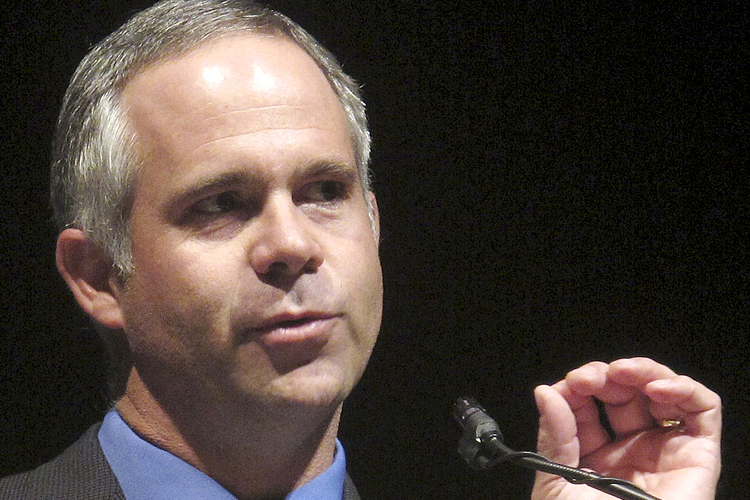
Rep. Tim Huelskamp, R-Kansas (Credit: AP/John Hanna)
 
 
The overarching goal for Republican leaders at their ongoing joint House-Senate retreat in Hershey, Pennsylvania seems to be, euphemistically put, “educating members” about what they can and cannot achieve in the 114th Congress. Mitch McConnell, John Boehner, and their leadership teams will try to “educate” the hot-bellied rank-and-file in the direction of achieving practical, if not thrilling, results that “shows they can govern responsibly.”

A lot of this “education” involves second-grade level arithmetic that national legislators should be able to work out on their own but apparently cannot. The simple mathematic principle is this: without two-thirds majorities in both the House and Senate, the Republicans cannot enact whatever bills they want into law. That’s supposing that a bill even makes it as far as the president’s desk: without Democratic input in the Senate, Republicans will have a lot of trouble clearing past procedural hurdles there. “Educating.”

Republicans will, however, have one (1) opportunity to work around a Senate filibuster over the next two years: budget reconciliation. It’s a convoluted process, but in short, budget reconciliation allows a Senate majority to bypass the filibuster on a piece of legislation that meets certain budgetary requirements — that it doesn’t increase the deficit, for example, at least if the legislative changes are to be permanent.

The are two strategic ways to go about using a reconciliation bill wisely.
If your party has control of both Congress and the presidency, reconciliation simply lets you bypass the Senate minority’s filibuster and get your most desired bundle of goodies straight to the president. President George W. Bush and the Republicans passed their 2001 and 2003 tax cuts through reconciliation. (Since they increased the deficit, they sunsetted after 10 years.) And the Democratic Senate passed a package of Affordable Care Act tidying-up in 2010 through reconciliation.

Using reconciliation in the sort of divided government that we have now is trickier. There’s no point in Republicans using this one-off opportunity to pass something insane that President Obama would never consider signing. To use reconciliation as a “messaging” bill would be wasteful. It would be smarter to use reconciliation on an issue that the president himself is interested in: say, corporate tax reform. Since Senate Republicans would be able to move their proposal with 51 votes, they wouldn’t need to tailor it to the desires of Senate Democrats. Then they could say to President Obama, “well, you said you wanted corporate tax reform; here’s your corporate tax reform.” Obama would have to make a difficult decision.

Educating. Members. That’s how new House Budget Committee chairman Rep. Tom Price spent the day in Hershey on Thursday, National Journal reports. He educated members on the fact that reconciliation is a “powerful tool, but not a silver bullet.” Reconciliation will not allow them to turn the country into their dreary free-market dystopia with one magical flick of the wand.

The subtext of Price’s remarks: using reconciliation to pass a repeal of the Affordable Care Act would be so, so stupid. President Obama would veto it and laugh his ass off, and that would be the end of it. There was some chatter around the the election among conservative media/pressure group circles about using reconciliation to pass a repeal of the ACA, but it seemed like the energy for that dissipated as its futility sunk in.

But the futility has not really sunk in. Or it has sunk in, and conservative members want to do it anyway for pure YOLO purposes. Here is Rep. Tim Huelskamp, Boehner antagonist, Cool Conservatives Club founding member, and incoming head of the Bachmann-founded House Tea Party Caucus:
This question is troublesome to members like Rep. Tim Huelskamp of Kansas, a conservative who says he speaks for a powerful populist Republican base (he told Bloomberg News that he will be the next chairman of the House Tea Party Caucus). Huelskamp says the only way Republicans can show they are serious about their hatred for the health care law is to use every tool at their disposal to roll it back. After all, it was public anger over health care that handed Republicans control of Congress, he reasoned.
“[Reconciliation] is the only chance to take it down. There’s no other strategy. I’d love to hear one. I’d love to be wrong,” Huelskamp said Wednesday. “We can’t do it next year. It’s too late because they’ll say it’s an election year.” [...]
Huelskamp is also part of the new caucus of far-right House members who are forming an invite-only group that is intended, at least in part, to take on more traditional Republican stances like spending on infrastructure or bargaining with the White House. Expect this group to howl if Republican leaders decide to simply hold more repeal-Obamacare votes that go nowhere.
Jesus. How do you get through to a guy like this? Is it possible?
Reconciliation is not “the only chance to take it down.” There is no chance to take down the Affordable Care Act. President Obama! Veto pen! Wake up, guy! Huelskamp and those who agree with him are tired of “repeal-Obamacare votes that go nowhere.” Well, who isn’t? It’s just bizarre that they consider sending a bill to President Obama repealing his signature health care law, that he would instantly veto, something other than a vote that goes nowhere. That’s precisely what it is. It just gets one step further on the path to nowhere. The destination is the same.

Huelskamp added that “an all-out war on Obamacare ‘is the only way to preserve our conservative credentials.’” That’s telling. The only way to prove that you’re a Real Conservative is to pass a beefed-up protest vote that comes with serious opportunity costs.

The Tim Huelskamps of the world and the leaders of the GOP speak to very different constituencies. Tim Huelskamp is trying to prove to a narrow band of old white conservative people in Kansas that he is the most conservative person ever. The leaders of the GOP are trying to prove to the country at large that their party is marginally adult-like ahead of the next presidential election. There’s no “educating” away this gap in interests.

Jim Newell covers politics and media for Salon.

Saturday, September 20, 2014

10 red states that mooch off the federal government


SALON


10 red states that mooch off the federal government


Republicans claim they've had it with American socialism. Maybe they should return the tax dollars subsidizing them


10 red states that mooch off the federal government(Credit: PhotosbyAndy via Shutterstock)
This article originally appeared on AlterNet.
AlterNet
One of the most hilarious talking points coming from far-right Republicans and the Tea Party is that when “red states” like Mississippi, Alabama and Louisiana are asked to bail out California or Massachusetts, that’s when they will finally become “fed up with socialism” and secede from the Union once and for all.
The problem with that meme is that it has no basis in reality: the more prosperous and Democrat-leaning areas of the United States are likely to be subsidizing dysfunctional “red states,” many of which are suffering from insufficient tax revenue and an abundance of low-wage workers who don’t have much to tax. Tea Party Republicans like to point out that poor cities like Detroit, Baltimore and Camden, New Jersey are run by Democrats, but they neglect to mention that some of the most affluent parts of the United States—from Manhattan to the Silicon Valley and the San Francisco Bay Area to Cambridge, MA to Seattle to Chicago’s North Shore suburbs—are dominated by the Democratic Party. People in those heavily Democratic areas pay a lot of federal income taxes, and quite often, their tax dollars go to red states.
Earlier this year, the personal finance website WalletHub.com conducted an in-depth study of the amounts individual states are paying in federal taxes compared to the amounts they are receiving. WalletHub analyzed data from the Internal Revenue Service, the U.S. Census Bureau, the U.S. Commerce Department and the Bureau of Labor Statistics. WalletHub’s research demonstrates that, as a rule, the states that are the most likely to rail against “big government” are the most likely to be benefiting from it.
A few of the states in WalletHub’s study that were receiving the most tax revenue from the federal government are states that President Barack Obama won in 2012 (most notably, New Mexico and Hawaii), but most were hardcore “red states.” And most of the states that, according to WalletHub, are taking less from the federal government than they are paying in are “blue states” that Obama won in both 2008 and 2012, including California, Massachusetts, Delaware, Illinois, New Jersey, New York and Minnesota. WalletHub’s research bears out comparable figures released by the nonpartisan Tax Foundation in the past: analyzing IRS data, Tax Foundation has found, more than once, that red states are likely to be the biggest recipients of federal tax money.
Below are 10 red states that take full advantage of the federal government and would be much worse off without the “coastal liberal elites” they love to complain about.
1. Mississippi: Mississippi is one of the most Republican states in the U.S.: Republicans dominate the state government, and not since Jimmy Carter’s victory in 1976 has a Democrat carried Mississippi in a presidential race. “Fiscal responsibility” is a recurring theme in Mississippi politics, where Democrats are often characterized as people who couldn’t balance a budget if their lives depended on it. Yet the reality is that Mississippi is one of the most blatant examples of a state receiving more federal tax money than it gives: WalletHub finds that for every dollar in federal taxes Mississippi pays, it receives $3.07 from the federal government. A 2007 report from the Tax Foundation found that Mississippi was receiving $2.47 from the federal government for every dollar it was paying in.
The fact that Mississippi has a hard time making ends meet without help from Washington, DC stems from being a so-called “right to work” state, meaning it has a very low rate of unionization and plenty of low-wage jobs. Mississippi is one of the poorest states in the country, and Republican policies in that state—hostility to unions, opposition to raising the minimum wage at either the federal or state level, tax breaks for the wealthiest 1% of Americans—will likely keep Mississippi from being a substantial contributor to federal income taxes.
2. Alaska: Alaska didn’t become part of the U.S. until 1959, and since then, it has gone Republican in every presidential race except 1964 (when Alaska favored Democrat Lyndon B. Johnson over Republican Barry Goldwater). A bastion of hard-right politics, Alaska is the state where Sarah Palin was elected governor in 2006. But when it comes to “small government,” Alaska Republicans don’t practice what they preach: according to WalletHub, Alaska receives $1.42 from the federal government for every dollar it contributes. Tax Foundation’s research showed Alaska receiving $1.93 from Uncle Sam for every dollar paid in. Alaska Republicans love to rail against the federal government, but the reality is that Alaska needs federal tax revenue badly in order to function.
Alaska is infamous for its harsh winters, which put considerable wear and tear on the state’s infrastructure—and the money for that much upkeep and maintenance has to come from somewhere. That somewhere is Boston, Santa Monica, Brooklyn, Seattle and all the other places that are full of upscale Democrats Palin considers “un-American.”
3. Alabama: Like Mississippi, Alabama is a state that hasn’t given a Democratic presidential candidate its electoral votes since 1976. Alabama is one of the most Republican-dominated states in the U.S., and it is also a state that is very reliant on the federal government. According to Wallet Hub’s study, Alabama receives 37% of its revenue from the federal government and receives $3.28 for every dollar it pays in federal taxes. Tax Foundation’s data showed Alabama receiving $2.03 in federal tax money for every dollar it was paying in.
There are ways in which Alabama could become less reliant on Washington, DC: raising the minimum wage and having a more unionized workforce would generate more income tax revenue. So would raising income taxes on Alabama’s 1%. But Alabama is a so-called “right to work” state, and a workforce that is generally underpaid and overworked isn’t going to generate a lot of federal income tax revenue.
4. Louisiana: In Republican-dominated Louisiana politics, it is fashionable to bash “big government liberals” who live in San Francisco or New York City. But when Louisiana Republicans do that, they are biting the hands that feed them. According to Wallet Hub’s research, Louisiana receives $3.35 from the federal government for every dollar it pays in; 44% of Louisiana’s funding, WalletHub says, comes from Washington, DC.
Louisiana, under Republican Gov. Bobby Jindal, is another “right-to-work” state, and a state with so many underpaid workers is naturally going to have a lot less income to tax. So instead of hating the “limousine liberals” in Seattle or Boston for voting Democrat, Louisiana Republicans should thank them for all the federal income tax revenue they are getting from them.
5. Indiana: When Barack Obama won Indiana’s electoral votes in 2008, it was an anomaly: Indiana, which went Republican in every presidential election from 1968-2004, is one of the most conservative states in the Midwest and is much more Republican than Minnesota, Wisconsin, Illinois or Michigan. Pundits have often said that when it comes to politics, Indiana is “more southern than the South.” But the disdain that Indiana Republicans often express for “big government” rings false because according to Wallet Hub, Indiana receives $2.01 from the federal government for every federal tax dollar it contributes and receives 33% of its funding from Uncle Sam. Indiana Republicans can hate coastal Democrats all they want, but without the federal tax revenue Democratic areas generate, Indiana would have a hard time functioning.
6. Montana: Montana has a long history of going Republican in presidential elections. Between 1952 and 2012, Montana went Republican in every presidential race except 1964 and 1992. But for a state that is so conservative-leaning, Montana receives a lot of help from the federal government: WalletHub’s research shows that Montana receives $1.55 from the federal government for every dollar it contributes (the Tax Foundation’s 2007 report found that Montana’s intake from Uncle Sam was $1.92 for every dollar paid). Montana faces the same challenge as Alaska—long, harsh winters that can put considerable stress on its infrastructure—and the idea that Montana could function without tax revenue is pure fantasy.
7. South Carolina: The fact that South Carolina hasn’t gone Democrat in a presidential election since 1976 is a badge of honor to the state’s GOP. And Republican Gov. Nikki Haley once boasted, “I love that we are one of the least unionized states in the country.” But that is nothing to be proud of, especially in light of the fact that non-union workers tend to have lower wages and therefore, contribute less tax revenue. The Tax Foundation found that South Carolina was receiving $1.92 from the federal government for every federal tax dollar it was contributing.
Haley doesn’t think much of liberals, but considering that Delaware, Illinois, New Jersey, Minnesota and New York State—all of which Obama won in both 2008 and 2012—are giving more tax dollars to the federal government than they are receiving, she might want to reconsider and start thanking them for their help.
8. West Virginia: Although West Virginia presently has a Democratic governor (Earl Ray Tomblin) and has a Democratic majority in its state senate (most of them center-right Blue Dogs), it is still a conservative-leaning state with a strong Republican influence. Republicans have carried West Virginia in the last four presidential elections (Mitt Romney won 62% of West Virginia’s vote in 2012), but that doesn’t mean that the state doesn’t receive a lot of help from the federal government: WalletHub described West Virginia as a state that receives $2.22 in federal tax revenue for every dollar it pays, and the Tax Foundation’s figure in its 2007 study was $2.57 received per dollar paid.
Poverty has a lot to do with that: West Virginia is one of the poorest states in the country, with 17.6% of its population living in poverty from 2008-2012 compared to 14.9% nationwide (according to the U.S. Census Bureau). And with so many West Virginians living in poverty, they simply aren’t going to be a major source of income tax revenue.
9. Tennessee: One of the ludicrous talking points from Republicans is that the poor aren’t paying enough taxes. Actually, the poor do pay a lot of taxes, from sales taxes to taxes on utilities. But according to Republicans, the poor are freeloaders because they aren’t paying enough federal income taxes—and one way to balance state budgets, they cluelessly argue, is to cut state services and raise state taxes on the poor. Republicans flunk math, however, because someone making $7.25 an hour is going to have a lot less to tax than someone making $30 or $40 an hour. And therein lies the budgetary problem for a so-called “right-to-work” state like Tennessee: too many of its residents are working low-paying, non-union service jobs that generate a lot less sales and other state tax revenue than the unionized jobs Republicans are so bitterly opposed to. Tennessee, according to WalletHub, receives $1.64 from the federal government for every federal tax dollar it contributes—and WalletHub notes that 41% of Tennessee’s funding comes from Uncle Sam.
10. Kentucky: Kentucky, despite having a two-term Democratic governor (Steve Beshear), leans Republican: although Bill Clinton won Kentucky’s electoral votes in 1992 and 1996, that state has gone Republican in every other presidential race since 1980. Mitt Romney carried Kentucky by 22% in 2012, and many of the Democrats who hold office in the Bluegrass State are center-right Blue Dogs. But as widespread as talk of “small government” and “fiscal responsibility” are in Kentucky, WalletHub’s research shows that Kentucky receives $2.39 from the federal government for every dollar it pays. According to WalletHub, 35% of Kentucky’s revenue comes from Washington, DC. And the Tax Foundation found that Kentucky was receiving $1.75 from the federal government for every dollar paid.

Thursday, September 18, 2014

Wingnuts’ crippling Ebola fury: Why they’re enraged about fighting a disease


SALON


Wingnuts’ crippling Ebola fury: Why they’re enraged about fighting a disease


Fox News and co. have a brand-new conspiracy theory -- and it's combining with ISIS hysteria to make them loony


Wingnuts' crippling Ebola fury: Why they're enraged about fighting a disease Laura Ingraham, Sean Hannity (Credit: Fox News)


It certainly seems as though there have been a lot of fearful events over this long hot summer of 2014. Yahoos with too much firepower are blowing airliners out of the sky, terrorists are videotaping themselves beheading journalists, and police are shooting unarmed kids down in the streets of America, just to name a few incidents of the past few months.  But it’s hard to imagine anything more scary than a rapidly mutating contagious killer disease pandemic that features all the worst symptoms of the flu until it culminates in bleeding from the eyes, ears, nose, mouth and rectum, the eyes swell shut, your genitals swell up, all of your skin hurts and you have a blood-filled rash all over your body. And then you die. In the panoply of things to be afraid of you’d think everyone could acknowledge that this is the big one.
In an Op-Ed in the New York Times last week Michael T. Osterholm, the director of the Center for Infectious Disease Research and Policy at the University of Minnesota, laid out a potential scenario right out of a movies — a horror movie. He discusses the very real potential that Ebola will make its move into the mega-cities of Africa, which will make it much more difficult to contain than it has been in previous outbreaks in the smaller villages. But this should make your hair stand on end:
The second possibility is one that virologists are loath to discuss openly but are definitely considering in private: that an Ebola virus could mutate to become transmissible through the air. You can now get Ebola only through direct contact with bodily fluids. But viruses like Ebola are notoriously sloppy in replicating, meaning the virus entering one person may be genetically different from the virus entering the next. The current Ebola virus’s hyper-evolution is unprecedented; there has been more human-to-human transmission in the past four months than most likely occurred in the last 500 to 1,000 years. Each new infection represents trillions of throws of the genetic dice.
If certain mutations occurred, it would mean that just breathing would put one at risk of contracting Ebola. Infections could spread quickly to every part of the globe, as the H1N1 influenza virus did in 2009, after its birth in Mexico.
This article in Wired discusses a recent epidemiology study that shows the “reproductive number” of the virus could end up infecting nearly a quarter of a million people by the end of this year. That’s what I call scary.
There’s no need to panic, of course. This is just one of many possibilities. But the fact that this virus’s hyper-evolution is unprecedented should make us all pay close attention. And some people are, including the president who made a big speech this week in which he announced that he would send 3,000 troops to Africa in an effort that will “entail command and control, logistics expertise, training, and engineering support.” The administration is being forthright that this is a very serious crisis and may cost upward of a billion dollars to successfully combat.
Now if there’s one thing we can usually count on from the right it’s that they will back the troops. Indeed, their first reflex is to send in the armed forces to solve just about any crisis, especially overseas. Right now they are nearly frothing at the mouth over President Obama’s ISIS strategy because it doesn’t include enough of an armed commitment to eradicate what they see as a uniquely dangerous threat to America. Sen. Lindsey Graham shrieked on behalf of the entire American right wing when he declared over the weekend:
“[T]hey’re intending to come here. So, I will not let this president suggest to the American people we can outsource our security and this is not about our safety. There is no way in hell you can form an army on the ground to go into Syria, to destroy ISIL without a substantial American component. And to destroy ISIL, you have to kill or capture their leaders, take the territory they hold back, cut off their financing and destroy their capability to regenerate.
“This is a war we’re fighting, it is not a counterterrorism operation! This is not Somalia; this is not Yemen; this is a turning point in the war on terror. Our strategy will fail yet again. This president needs to rise to the occasion before we all get killed back here at home.”
If they survive our best shot, this is the last best chance, to knock him out, then they will open the gates of hell to spill out on the world. This is not a Sunni versus Sunni problem, this is ISIL versus mankind!”
They are, as Graham illustrates there, nearly paralyzed with fear over the threat of ISIS and are demanding that the president commit to all-out war with American troops on the ground to stop them. One can only assume they mean for the U.S. to occupy the entire Middle East for the foreseeable future as John McCain once quipped he was prepared to do “for a hundred years.” They certainly haven’t offered any other scenarios that would address the issues in the comprehensive way they seem to think is necessary.
And all of this hand-wringing is despite numerous intelligence analyses that show ISIS is not an immediate threat to the United States (but rather a threat to the fragile order in the Middle East, which isn’t the same thing). They are hysterical about the possibility of an ISIS terrorist sneaking over the border to kill us all in our beds because we have failed to build a thousand-mile wall high enough or a moat deep enough to keep everyone out forever. (As Joan Walsh documented, the threat as “exposed” by James O’Keefe and company is almost too ludicrous to even be funny.)
But what definitely isn’t funny is the reaction these people are having to the Ebola threat. Media Matters documented the reactions:
Former congressman and Tea Party icon Allen West:
The world need to step up against Islamo-fascism but I suppose fighting Ebola is easier for a faux Commander-in-Chief than to fight a real enemy of America.  Nice optics there Barack, good try to change the subject, and make yourself seem like a leader fighting a really bad flu bug — all the while you dismiss the cockroaches who behead Americans.
Sean Hannity said that we should be sending those 3,000  soldiers to Iraq.  (He did say he felt “bad” for the people who had Ebola, though, so he isn’t a total monster.) Rush also complained that we are sending troops to “fight” Ebola (which he claimed not to understand) when we should be sending them to fight ISIS.  But nobody sounded more shockingly ignorant than the Cersei Lannister of the right wing, Laura Ingraham:
“I’m just getting very confused about the nature of this enemy.  Is it those scary little worms that Drudge always has on the Drudge Report? The scary little Ebola worms? Is that the real threat to national security?”
The woman went to Dartmouth.
She did go on to say that if we really want to stop Ebola the way to do it is to seal our borders.  (For her, Ebola and small child refugees are the same thing.) Of course these people aren’t big believers in science, we knew that, so one supposes it’s too much to ask for most of them to be able to tell the difference between lurid terrorist propaganda and a real existential threat from a deadly disease.  (Some of them even believe that dinosaurs were on Noah’s Ark, which means they lived alongside humans.) Expecting them to understand the meaning of a real threat may be a bit beyond their capability.
Everyone should just pat these “thought leaders” on the head and say “that’s nice” whenever they start screeching about the next wave of scary monsters coming to kill us all in our beds. They don’t know what they’re talking about.
There may be monsters coming to kill us.  But we can’t see them with the naked eye. And they aren’t making YouTube videos.
Heather Digby Parton
Heather Digby Parton, also known as "Digby," is a contributing writer to Salon. She was the winner of the 2014 Hillman Prize for Opinion and Analysis Journalism.